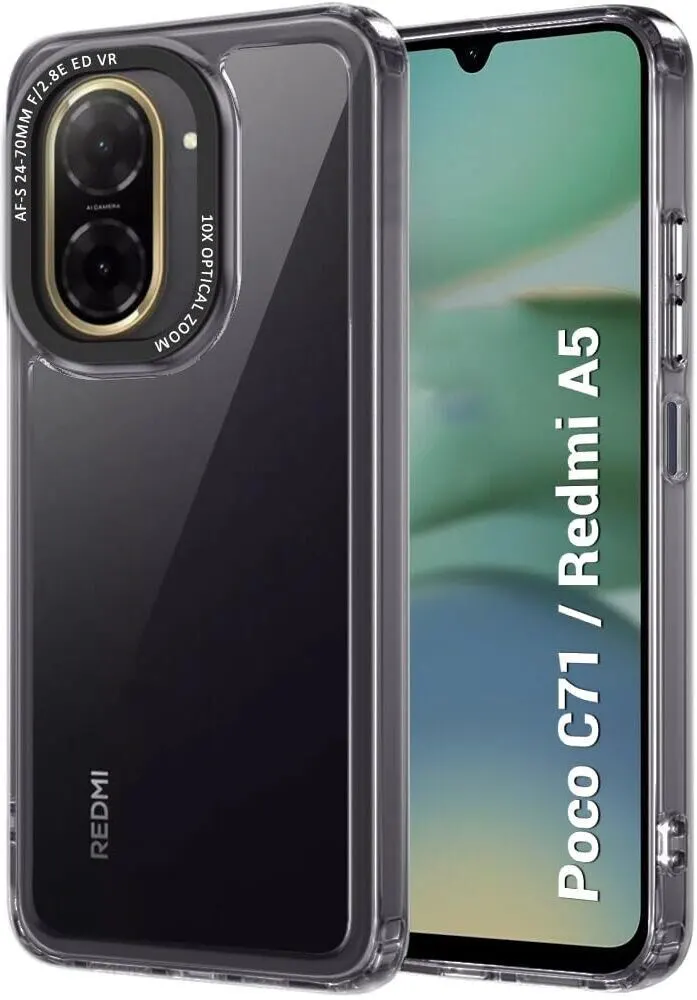
What "shockproof" means
Published 4 October 2026
"Shockproof" is not a standard and no one tests covers the same way. But the features that earn the word are visible on the cover itself, and knowing them is how you tell a cover built for a drop from one with a word printed on the box.
Corner pockets, not a thicker back
A phone that is dropped almost always lands on a corner, which is why the corners are where a protective cover is built differently. Look for a visible gap or a ribbed section at each corner: that is an air pocket, and it gives the impact somewhere to go other than into the frame of the phone.
The back of the cover matters much less. A uniformly thick back mostly adds weight and heat, and does not change what happens in the half-second of a drop.
The raised lip, which people forget
Lay the phone face-down on a table. If the glass touches the table, the cover has no raised lip, and a drop on a flat surface is a screen repair. The same applies to the camera: a lip that lifts the lens off the surface is what stops scratches on the part you photograph with every day.
It is worth checking this on the product page photos before buying — it is visible in a side view, and it is the difference between a cover that protects the screen and one that protects the back only.
What no cover can do
A cover cannot make a phone unbreakable, and the covers described as shockproof are not tested against a standard the way a helmet is. What they reliably do is survive the everyday drop — out of a hand, off a table, out of a pocket onto a pavement — which is most of what happens to most phones.
If a cover claims a specific drop height, that claim came from somewhere; ours do not make one. What we can tell you is what each cover is made of and how it is built, and that is on every product page.